
Media for project "NESP TWQ Round 3 - Project 3.3.3 - Defining the values of the ecological systems that influence the GBR and lie outside the marine park and world heritage area boundaries"
This page contains all media associated with this project. For more information about the project and its datasets please go to the project metadata record https://eatlas.org.au/data/uuid/f9cbde58-834f-43d5-92ef-6994bda47e4c.
Images
Videos
Articles
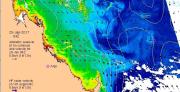
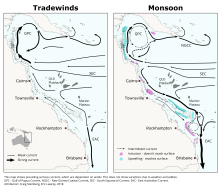
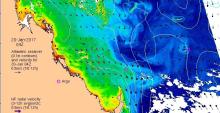
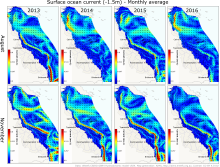
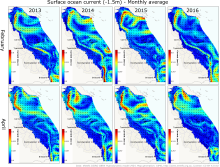
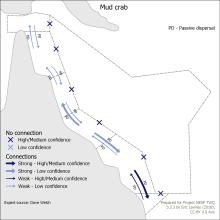
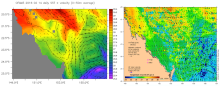
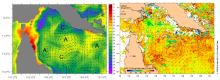
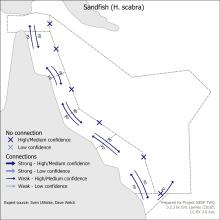
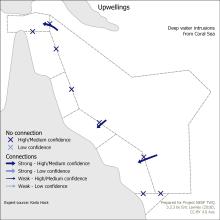
Ocean currents are known to be the major mechanism by which the values across the entire northeast Australian seascape are both defined and connected. For example, by facilitating dispersal of larvae and particles (Wolanski, 2016) or the propagation of climate features (e.g. marine heatwaves that can cause coral bleaching).
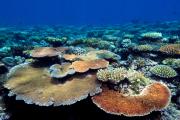
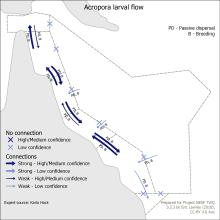
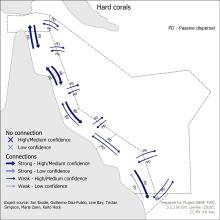
Hard corals are foundational species on coral reefs. Through the production of calcium carbonate skeletons, hard corals create the physical substrate and three-dimensional structure that supports the vast diversity of organisms that comprise coral reef ecosystems.
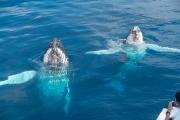
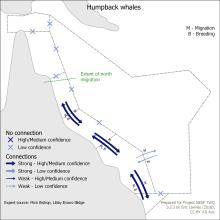
Humpback whales are iconic megafauna that play a significant role in the northeast Australian seascape in ecological, cultural and economic contexts.
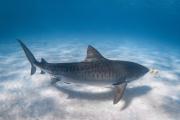
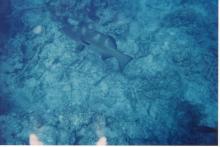
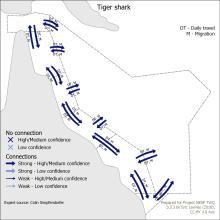
Tiger sharks have a worldwide distribution and although tending to be concentrated in tropical waters are also commonly found in temperate waters (Pepperell, 2010).
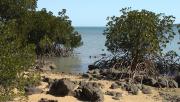
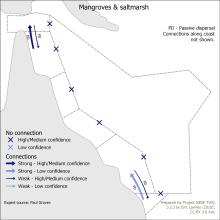
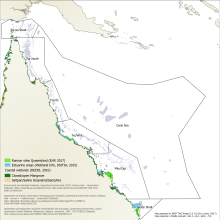
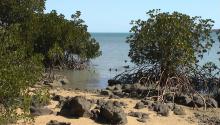
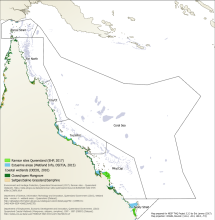
Mangroves are part of a mosaic of coastal habitats with coral reefs and seagrasses that sustain a diversity of organisms and a variety of industries (e.g. fisheries and tourism). They also protect the coastline against erosion and storms when adequately inter-connected. Typically, mangroves and saltmarshes are located along the shore or on islands, and tidal estuaries are suitable for mangrove forests, saltmarshes and saltpans to grow, providing important feeding grounds for shorebirds, dugongs, turtles, dolphins, fish, molluscs, crustaceans, sharks and rays.
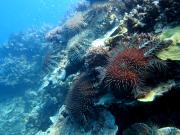
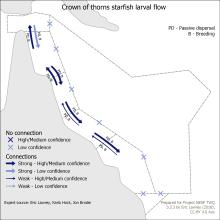
In the past 50 years, four waves of crown-of-thorns starfish outbreaks have had a major impact on the many reefs that make up the Great Barrier Reef. These began in 1962, 1979, 1993 and 2009 with each wave lasting about 15 years
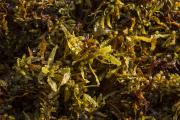
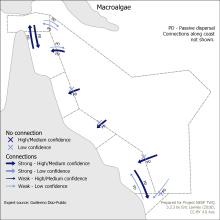
Macrolgae, commonly called seaweeds, are marine plants that photosynthesize, but reproduce without flowers (seagrasses are an example of a marine flowering plant). Macroalgae are visible to the naked eye (in contrast to microalgae), and generally grow attached to the seabed or reef substrate.
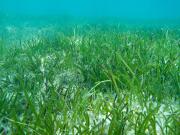
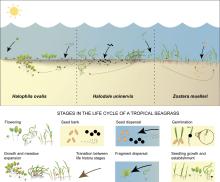
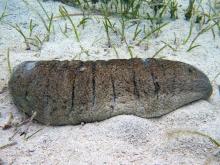
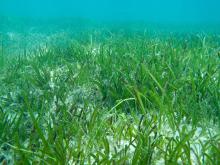
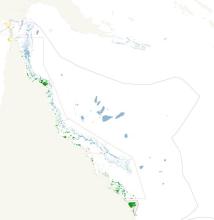
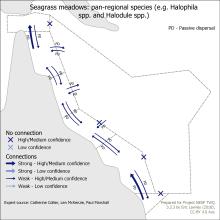
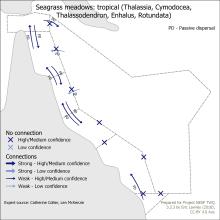
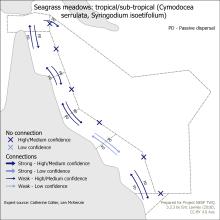
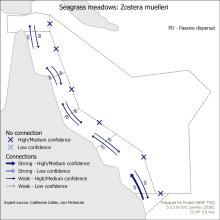
Seagrasses are marine plants found in estuaries, reefs and deep water environments throughout the northeast Australian seascape. They form meadows that provide nutrient-rich habitat for many animals, for example, sea cucumbers, fish, urchins, marine turtles, dugongs, sharks and rays all use seagrass meadows at some time during their life cycle.
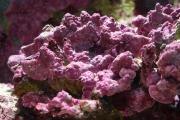
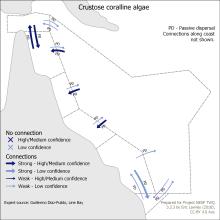
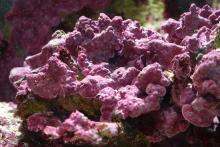
Crustose coralline algae (CCA) are a red macroalgae (seaweed) that accumulate calcium carbonate and generally grow as encrusting, pink-colored, veneers over the reef substrate. While often inconspicuous to the casual observer, CCA play a vital role in the maintenance of many coral reef systems.
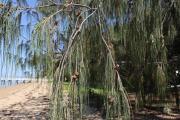
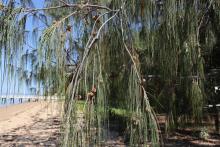
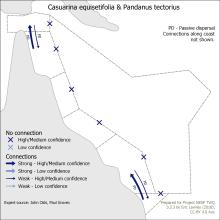
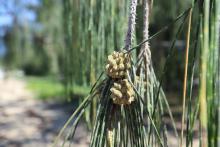
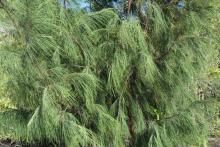
Coastal she-oaks (Casuarina equisetifolia) are an evergreen tree (6 to 20m high) found on coastal sand dunes, beach fronts in sands alongside estuaries and behind fore-dunes, and on gentle lower hills/headlands. Other common names include beach casuarina, beach she-oak or whistling tree.
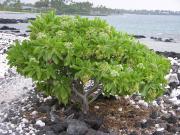
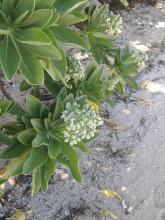
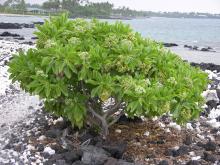
Tree Heliotrope <i>(Heliotropium foertherianum)</i> is a shrub or small tree, typical of littoral zones, 1-5 m tall, with a spread of about 5 m. It is a strand plant of coastal environments, and is often found near the water’s edge, even where waves occasionally wash over its root system or batter its lower trunk or roots. It is capable of growing in saline conditions and in nutrient-poor sands and rocky soils, and often forms the seaward fringe of vegetation.
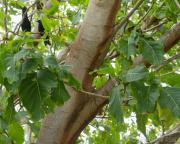
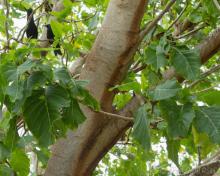
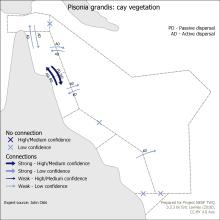
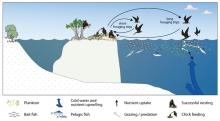
Pisonia; or Birdlime Tree (due to the fact that at times nesting birds become covered with the sticky fruits).
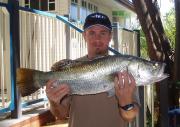
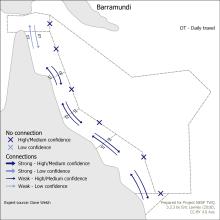
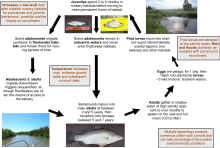
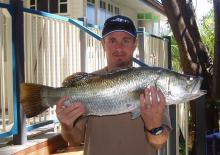
Barramundi is an iconic species throughout northern Australia and are important for all fishing sectors economically, socially and culturally. Catches of barramundi vary spatially and temporally and can be significantly related to river flow or rainfall and evaporation. Variability in catch probably represents changes in underlying stock abundance linked to environmental drivers.
The Great Barrier Reef (GBR) was listed as a World Heritage Area because of its Outstanding Universal Values.