Environmental Briefings

Environment Australia is tasked with managing the networks of Commonwealth Marine Reserves. This is particularly challenging in the remote and poorly known N and NW regions. For example, managers need to understand how biodiversity varies across these regions, but no dataset of this exists. To provide a starting point for building this knowledge, researchers from Australia's NESP Marine Biodiversity Hub's D1 project here highlight five key environmental variables that may help predict biodiversity patterns across the regions.

These variables were identified because continuous datasets of them are available over the entire N and NW regions, and they serve as proxies for other variables that may more directly affect biodiversity. For example, no regional-scale dataset of substrate hardness currently exists, but available datasets of bottom current velocity and geomorphic features help determine substrate hardness patterns.

Click on the name of each environmental variable in the list below (originals were: depth, sediment grain size, chlorophyll-a, geomorphic features and bottom current velocity) to view an interactive map and read more about it. More datasets will be added to this section as they become available.
Published on
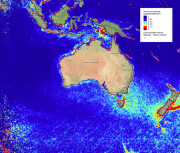
mean primary productivity hotspots
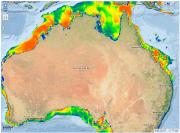
Much of life on earth ultimately depends on the capture of light from the sun and its translation into energy via photosynthesis.
Published on
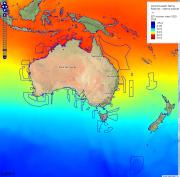
sst_summer_mean_screen_capture.JPG
Understanding sea surface temperature and how it varies across the globe over time is incredibly important.
Published on
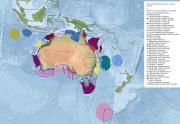
icons_montage.jpg

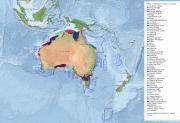
Biologically Important Areas (BIAs) are regions where aggregations of individuals of a particular species are known or likely to display important behaviors such as breeding, foraging, nesting or migration. They have been identified from the literature and using expert scientific knowledge about species' distribution, abundance and behavior. BIAs were created to inform decision-making under the EPBC Act, and have been defined for a selection of protected species only.

Published on
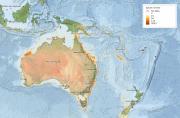
speciesRichness_PreviewImage_nwatlas.jpg
Species richness is a count of the number of different species that exist in a given region or ecological community.
Published on
ramsar_PreviewImage_nwatlas.jpg
Wetlands are a critical part of our natural environment.
Published on
WHA_PreviewImange_nwatlas.jpg
World Heritage Areas are places that are considered to be of outstanding value to humanity.
Published on
IMCRAprov_PreviewImange.jpg
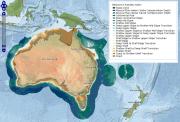
The Integrated Marine and Coastal Regionalisation of Australia (IMCRA v4.0) classified Australia's marine environment into ecologically relevant bioregions for regional planning.
Published on
IMCRAmeso_PreviewImange.jpg
The Integrated Marine and Coastal Regionalisation of Australia (IMCRA v4.0) classified Australia's marine environment into ecologically relevant bioregions for regional planning.
Published on
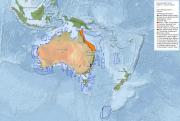
KEF_PreviewImange.jpg
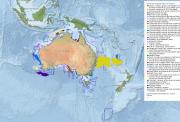
The Key Ecological Features (KEFs) are parts of the marine ecosystem that are considered to be of particular importance for either a region's biodiversity or its ecosystem function and integrity.
Published on
Bathomes of Australia
Bathomes are large spatial regions (usually exceeding 1000 km2) characterised by the bathymetric (depth-related) distribution of biota.
Published on
sheer_stress.JPG
Bottom current velocity can affect abundance and biodiversity of benthic fauna by altering disturbance regimes, changing available habitats, and regulating nutrient flows.
Published on
geomorphic.JPG
Geomorphologic features are categorical descriptors of the shape of the seabed that range in scale from thousands of km2 (e.g.
Published on
chla.JPG
Chlorophyll-a can be estimated at continuous broad scales in the top layers of the ocean via satellite imagery (note this is different from chlorophyll-a in sediments).
Published on
sediment_grain-size.JPG
Sediment grain-size is often assumed to be a key driver of infaunal communities (McArthur et al.
Published on
depth.JPG
Depth is a consistently powerful explanatory variable in benthic studies (Gray 2001) due to its association with a range of other factors directly affecting abundance, biomass, and biodiversity (e.g.