
Media for project "NERP TE Project 1.1 - Monitoring status and trends of coral reefs of the Great Barrier Reef (AIMS)"
This page contains all media associated with this project. For more information about the project and its datasets please go to the project metadata record https://eatlas.org.au/data/uuid/1a46774e-a3ac-4982-b08b-94ce1ad8d45c.
Images

Articles
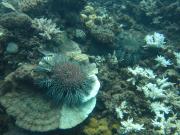
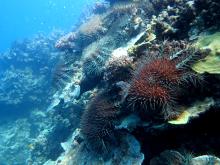
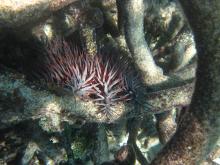
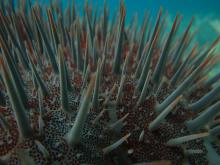
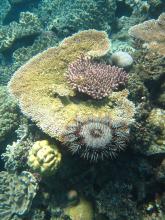
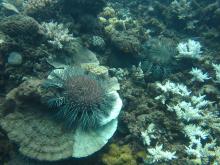
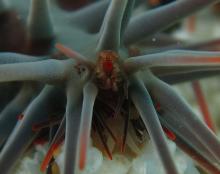
The crown-of-thorns seastar, Acanthaster planci, is a predator of corals and along with cyclones is the major cause of coral mortality on the Great Barrier Reef (GBR) 1 .
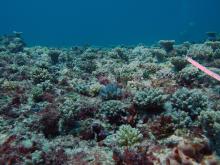
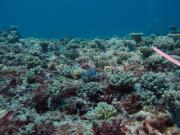
Corals are the back bones of coral reef ecosystems.
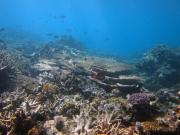
Corals have an interesting life cycle and spend part of their lives floating around in the sea and part of their lives stuck to the reef. Adult corals are actually colonies made up of many organisms called polyps.
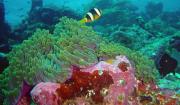
Preserving biodiversity is an essential component of most conservation and environmental management strategies but what actually is biodiversity and why is it important?
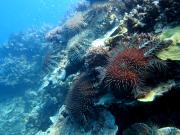
The crown-of-thorns starfish (COTS) (Acanthaster planci) feeds almost exclusively on hard corals and is endemic to coral reef ecosystems throughout the Indo-Pacific (Birkeland 1990).
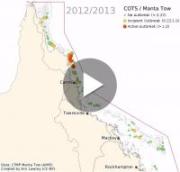
This animation shows the locations of Crown of Thorns Starfish (COTS) outbreaks as measured over the last 30 years.
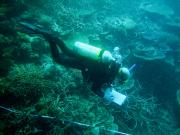
The Great Barrier Reef (GBR) has great economic importance as well as immense aesthetic value, contributing an estimated $5.8 billion to the Australian economy, principally through tourism, and commercial and recreational fisheries.