Recent datasets

NERP TE Project 9.1 - Dynamic vulnerability maps and decision support tools for the Great Barrier Reef, 2011-2014 (AIMS)

Published on
22 July 2011
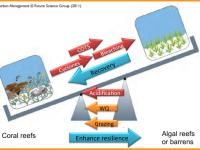
To support management of the Great Barrier Reef Marine Park, coral reef managers need decision support tools that can integrate physical and biological information at a variety of spatial and temporal scales. In this project we will construct vulnerability maps for the Great Barrier Reef (GBR) This project will deliver a novel framework for linking impacts of environmental change to spatial patterns of coral reef resilience and vulnerability.

NERP TE Project 13.1 - e-Atlas, 2011-2014 (AIMS)

Published on
22 July 2011

The e-Atlas is a website and mapping system for presenting environmental research data in an accessible form that promotes greater use of this information. It is also a data management system for preserving and encouraging reuse of this data. The e-Atlas is the primary data and knowledge repository for 38 NERP Tropical Ecosystems Hub projects, 6 Reef Rescue Marine Monitoring Program projects and historically, the Marine and Tropical Science Research Facility. This project will: 1.

NERP TE Project 3.1 - Rainforest Biodiversity: (a) Monitoring; (b) Climate change vulnerability and adaptation; (c) Determinants of biodiversity – synthesis and integration; and (d) Status, trends and future predictions, 2011-2014 (JCU)

Published on
22 July 2011

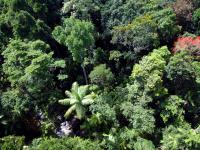
This project will act as an integrating focus within the rainforest theme to strategically target research gaps and thereby increase our understanding of the drivers of rainforest biodiversity. We will generate high resolution maps and landscape scale estimates of temporal trends in the condition of biodiversity and environmental changes. The project consists of four subprojects: A. Monitoring: Tasks include a microsensor network, standardised vertebrate surveys, habitat structure monitoring and data harvesting from other projects.

NERP TE Project 5.2 - Experimental and field investigations of combined water quality and climate effects on corals and other reef organisms, 2011-2014 (AIMS)

Published on
22 July 2011

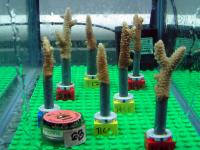
The objective of this project is to assess how management of local stressors such as land runoff can help improve the resilience of coral reefs to global stressors (climate change) which are more difficult to manage. Complementary laboratory and field experiments will investigate the combined impacts of declining water quality (increased nutrients and sediments, and reduced light and salinity), increased sea temperature and ocean acidification on key reef species groups such as corals, foraminifera, crown-of-thorns starfish and rock-boring sea urchins. 1.

NERP TE Project 4.4 - Hazard assessment for water quality threats to Torres Strait marine waters, ecosystems and public health, 2011-2013 (JCU)

Published on
22 July 2011

This project involved an assessment of all existing and potential sources of pollution to the Torres Strait marine environment. This was combined with information on water movement patterns to assess the hazard (and to some degree risk) of these pollutant sources to marine ecosystems and public health. This project was predominantly a desktop study with some field work to sewage treatment plants, and other point sources of potential pollutants. This project: 1. Collated information regarding Torres Strait water quality pollutant sources at a range of scales (regional to local). 2.

NERP TE Project 12.1 - Indigenous co-management and biodiversity protection, 2011-2014 (CSIRO)

Published on
22 July 2011

The project seeks to improve understanding of practices that can underpin co-management arrangements for conservation areas, including the Wet Tropics World Heritage Area (WTWHA). A co-research team of CSIRO scientists, Rainforest Aboriginal peoples, protected area managers and other key partners will investigate the potential of Indigenous Protected Areas (IPAs), and other collaborative models and tools, to engage Indigenous values and world views. The team will focus on the conditions under which these arrangements lead to effective joint management.

NERP TE Project 4.3 - Ecological risk assessment of pesticides, nutrients and sediments on water quality and ecosystem health – Phase 1, 2011-2012 (CSIRO, JCU)

Published on
22 July 2011

This project undertook a scoping study to develop a robust approach that will allow us in Phase 2 to carry out an ecological risk assessment (ERA) of nutrients, fine suspended sediments, and pesticides used in agriculture in the GBR region including ranking the relative risk of individual contaminants originating from priority catchments to the GBR ecosystems using a systematic, objective and transparent approach. The researchers will specifically look at a method able to evaluate relative risk to different ecosystems and their keynote species from the different contaminants, e.g.

NERP TE Project 6.1 - Maximising the benefits of mobile predators to GBR ecosystems: the importance of movement, habitat and environment, 2011-2014 (AIMS)

Published on
22 July 2011

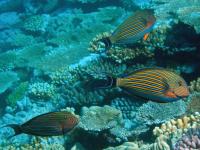
This project will determine the movement and habitat use of large predatory fishes such as sharks and coral trout in reef and coastal environments of the Great Barrier Reef. This project will employ acoustic monitoring technology in a series of inshore and offshore environments including coastal bays, inshore reefs and offshore reefs to monitor the presence and movements of predator species (elasmobranchs and teleosts).

NERP TE Project 1.1 - Monitoring status and trends of coral reefs of the GBR, 2011-2014 (AIMS)

Published on
22 July 2011

This project will continue a unique data set that documents long-term trends in coral reef communities of the Great Barrier Reef (GBR). In 2012-13 and 2014-15 the LTMP will resurvey the ‘core’ reefs that have been surveyed since 1992. The AIMS LTMP has made intensive surveys of 47 ‘core’ reefs since 1992. The survey reefs are stratified by latitude and position across the GBR lagoon so as to give broad geographic coverage.

NERP TE Project 9.3 - Prioritising management actions for Great Barrier Reef islands, 2011-2014 (JCU)

Published on
22 July 2011

This project will develop a cost-effective approach for prioritising management actions across Great Barrier Reef islands to maximise conservation outcomes. The approach will be broad-based and include pest control, adjustment of fire regimes, biosecurity measures and monitoring. A decision-support tool with GIS capability will help managers to identify management priorities within and between islands.The sub-region selected for this project includes 150 islands within the Great Barrier Reef World Heritage Area from south of Mackay to Bundaberg.

Point of contact

NERP TE Project 7.3 - Climate change and the impacts of extreme climatic events on Australia’s Wet Tropics biodiversity, 2011-2014 (JCU)

Published on
22 July 2011

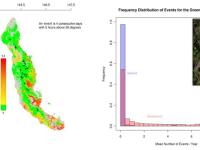
This project investigates in detail the exposure and sensitivity of Wet Tropics animals to extreme climate and weather events, such as heat waves, fires, flooding rain and cyclones. This information will be used to assess and map the vulnerability of biodiversity to the impacts of current and future extreme events in the Wet Tropics bioregion. The information gathered in the Wet Tropics can potentially be applied to other regions in Australia and elsewhere to predict and mitigate the impacts of extreme climatic events on biodiversity.

NERP TE Project 12.4 - Governance, planning and the effective application of emerging ecosystem service markets to secure climate change adaptation and landscape resilience in Far North Queensland, 2011-2013 (JCU)

Published on
22 July 2011

This project involved working with a range of stakeholders to identify the most effective governance systems for managing climate change adaptation in the Wet Tropics through the emergence of new ecosystem service markets, including Carbon Farming. The project will directly contribute to: Regional climate change adaptation policies and planning processes, Regional Natural Resource Management (NRM) organisations’ role in guiding emerging carbon markets in Australia and the region. This project developed: 1.

Marine Sediments database (MARS) (GA)

Published on
13 April 2011

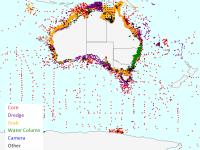
The MARine Sediment (MARS) database contains detailed information on seabed sediment characteristics for samples collected from Australia's marine jurisdiction, including the Australian Antarctic Territory. It also includes the Geat Barrier Reef (GBR). It is an important scientific resource that includes survey and sample information such as locations, water depths and sample descriptions.

Project - Torres Strait Sustainable Land Use Plan (SLUP) 2010 (TSRA, RPS)

Published on
07 March 2011

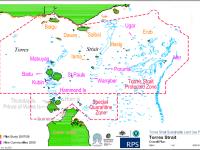
This project seeks to ensure that planning for the future development of the Torres Strait Islands is sustainable and capable of taking into account ecological and social information, assets, risk and existing infrastructure. This Plan provides the following information for each island: •identification of key environmental assets; •identification of key land management issues; •identification of key infrastructure needs; •land use mapping identifying land suitable for development and conservation; and •land use for the future sustainable management.

eAtlas Web Mapping Service (WMS) (AIMS)

Published on
01 January 2011

The eAtlas delivers its mapping products via two Web Mapping Services, a legacy server (from 2008-2011) and a newer primary server (2011+) to which all new content is added. This record describes the primary WMS. This service delivers map layers associated with the eAtlas project (https://eatlas.org.au), which contains map layers of environmental research focusing on the Great Barrier Reef and its neighbouring coast, the Wet Tropics rainforests and Torres Strait. It also includes lots of reference datasets that provide context for the research data.

Project 3DGBR: gbr100 High-resolution Bathymetry for the Great Barrier Reef and Coral Sea (JCU)

Published on
20 August 2010

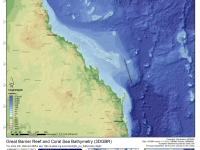
The gbr100 dataset is a high-resolution bathymetry and Digital Elevation Model (DEM) covering the Great Barrier Reef, Coral Sea and neighbouring Queensland coastline. This DEM has a grid pixel size of 0.001-arc degrees (~100m) with a horizontal datum of WGS84 and a vertical datum of Mean Sea Level (MSL). For the latest version of this dataset download the data from http://deepreef.org/bathymet...athy.html This dataset was developed as part of the 3DGBR project.

Mission Beach - Habitat quality, canopy cover, tenure type (6 months after cyclone Larry), 2006 (MTSRF 4.9.3, JCU)

Published on
20 July 2010

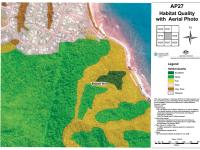
This dataset consists of an atlas of the habitat quality of the urbanized and agricultural landscapes of the Mission beach region in August 2006, 6 months after cyclone Larry. This analysis and classification includes habitat quality, canopy cover, vegetation quality, vegetation types, tenure type and aerial photography at a resolution of 0.5m. These maps of habitat quality highlight potential priority areas for maintenance and/or restoration of connectivity and is a tool for natural resource managers to implement restoration goals at Mission beach.

Queensland Coastal Wetlands (Mangroves, saltpans, samphire), 1987 - 1997 (DEEDI)

Published on
08 July 2010

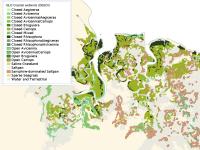
1:100,000 coastal wetland vegetation mapping for the Queensland coastline including mangrove communities, saltpans and saline grasslands. Mangrove areas are classified based on the dominant genus (Ageiceras, Avicennia, Ceriops, Bruguiera, Rhizophora). This dataset was derived from automatic classification of 25m resolution Landsat TM images, colour aerial photography and ground truthing. The resulting data has a positional accuracy of 100 meters and a classification accuracy of approximately 80%.

Collaborative Australian Protected Areas Database (CAPAD) 2010 - External

Published on
01 July 2010

The Collaborative Australian Protected Areas Database (CAPAD) 2010 provides both spatial and text information about government, Indigenous and privately protected areas for continental Australia. State and Territory conservation agencies supplied data current for various dates between June 2010 and January 2011. This is the eighth version of the database, with previous versions released in 1997, 1999, 2000, 2002, 2004, 2006 and 2008.