Articles

Published on
Image
Ocean
Of the five World Heritage sites in Queensland, two are located in Tropical North Queensland and provide the region with its key iconic experiences.
Published on
This research incorporated field and experimental work on benthic foraminifera as indicators for water quality in the Great Barrier Reef (GBR). Firstly, distribution of benthic foraminifera was examined on 20 reefs in four regions of the GBR (Princess Charlotte Bay, Wet Tropics, Whitsunday Area, and Mid/Outer-shelf reefs), and along a water quality gradient in the Whitsunday region. Secondly, manipulative laboratory experiments were carried out to determine whether the distribution of symbiont-bearing foraminifera is controlled by light levels or other environmental factors.
Published on
Image
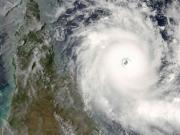
Cyclone Ingrid
Tropical storms (cyclones, hurricanes or typhoons) are the most severe form of mechanical disturbance of coral reefs.
Published on
Image
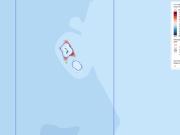
PreviewImage_bathy_lh_4m.jpg
Fine scale bathymetry information is available for the Lord Howe Marine Park
Published on
Image
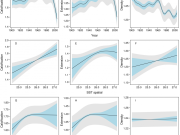
Plots of coral threats over time and with SST
Reef-building corals are under increasing physiological stress from a changing climate and ocean absorption of increasing atmospheric CO2. We investigated 328 colonies of massive Porites corals from 69 reefs of the Great Barrier Reef (GBR). Their skeletal records show that throughout the GBR, calcification has declined by 14.2% since 1990, predominantly due to extension declining by 13.3%. The data suggest such a severe and sudden decline in calcification is unprecedented in at least the last 400 years.
Published on
Image
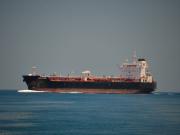
Bulk carrier ship

Most marine invasive species have been introduced to Australian waters unintentionally through shipping activities and mariculture.
Published on
Image
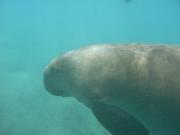
Dugong
Dugongs (Dugong dugon) are marine mammals, which are commonly known as sea cows.
Published on
Image
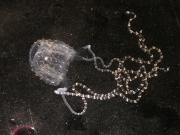
preview.JPG

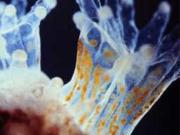
Tropical northern Australian waters are home to a number of harmful jellyfish, including the large multi-tentacled deadly box jellyfish Chironex fleckeri and several species of smaller jellyfish known to cause the debilitating Irukandji syndrome.

Published on

Coral reef fish are caught by hook and line along the length of the Great Barrier Reef from the Torres Strait south to Fraser Island. More than 120 fish species are caught in the commercial line fishery, although only a few of them are actively targeted by commercial fishers. The high-value target species include coral trout, red throat emperor, red emperor, tropical snapper and Spanish mackerel.

Recreational anglers also target these species, particularly highly prized trophy species such as Spanish mackerel, red emperor and coral trout.
Published on
Image
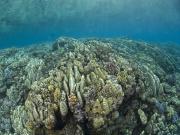
Stark Reef
Identifying the principal spatial patterns in biodiversity of corals is a requirement for effective ecosystem management.
Published on
Image
Trichodesmium
Water quality (WQ) is an important determinant of ecosystem health in the Great Barrier Reef (GBR).
Published on
Image
Octocorallia
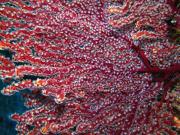
Soft corals, sea fans and gorgonians are common names for a group with the scientific name Octocorallia or Alcyonacea.
Published on
Image
Minimum annual mean of Secchi depth
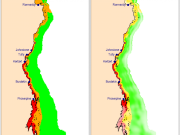
The study reported here defines water quality guideline values for the Great Barrier Reef (GBR).
Published on
Image
Biodiversity in north west Australia
Biology is the study of all living organisms (plants, animals, microorganisms) and how they interact with each other and their environment.
Published on
Image
Zooxanthellae

Zooxanthellae are unicellular, golden-brown algae (dinoflagellates) that live either in the water column as plankton or symbiotically inside the tissue of other organisms. The most common symbiotic association is with hard, reef-building (or hermatypic) corals, although zooxanthellae can also be found living inside the tissue of soft corals, jellyfish, giant clams and nudibranchs.
Published on
Image
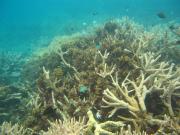
Macroalgae grows profusely amongst the branches of this Acropora sp. coral colony. If conditions shift the competitive balance, macroalgae may outcompete the coral
Macroalgal species are divided among three large groups that are named according to the colour of their dominant photosynthetic and accessory pigments: red (Rhodophyta), green (Chlorophyta) and brown (Phaephyta).
Published on
Image
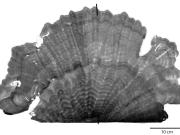
Coral slab growthrings
Rising levels of atmospheric carbon dioxide from fossil fuel combustion and deforestation is gradually altering the chemistry of the oceans, making seawater more acidic. The increased acidity has profound implications for all life on Earth, through its likely impacts on plankton, which is the basis of almost all marine food webs. It may also significantly affect the future of the Great Barrier Reef and other coral reefs. Ocean acidification and global warming are two very different, but equally important, spin-off effects of increasing atmospheric carbon dioxide concentrations.
Published on
Image
Pink crustose coralline algae
Crustose coralline algae (CCA) are rock-hard calcareous red algae that fulfill two key functional roles in coral reef ecosystems: they contribute significantly to reef calcification and cementation, and they induce larval settlement of many benthic organisms.
Published on
Image
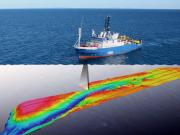
Multibeam surveying
Acoustic mapping of the seafloor off Cairns reveals the remains of a huge landslide from the continental slope of Australia
Published on
Image
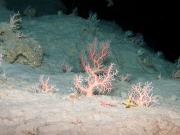
Stylasterid corals
A unique community of coldwater corals is discovered in depths of 1300 m within the Coral Sea Marine Park